

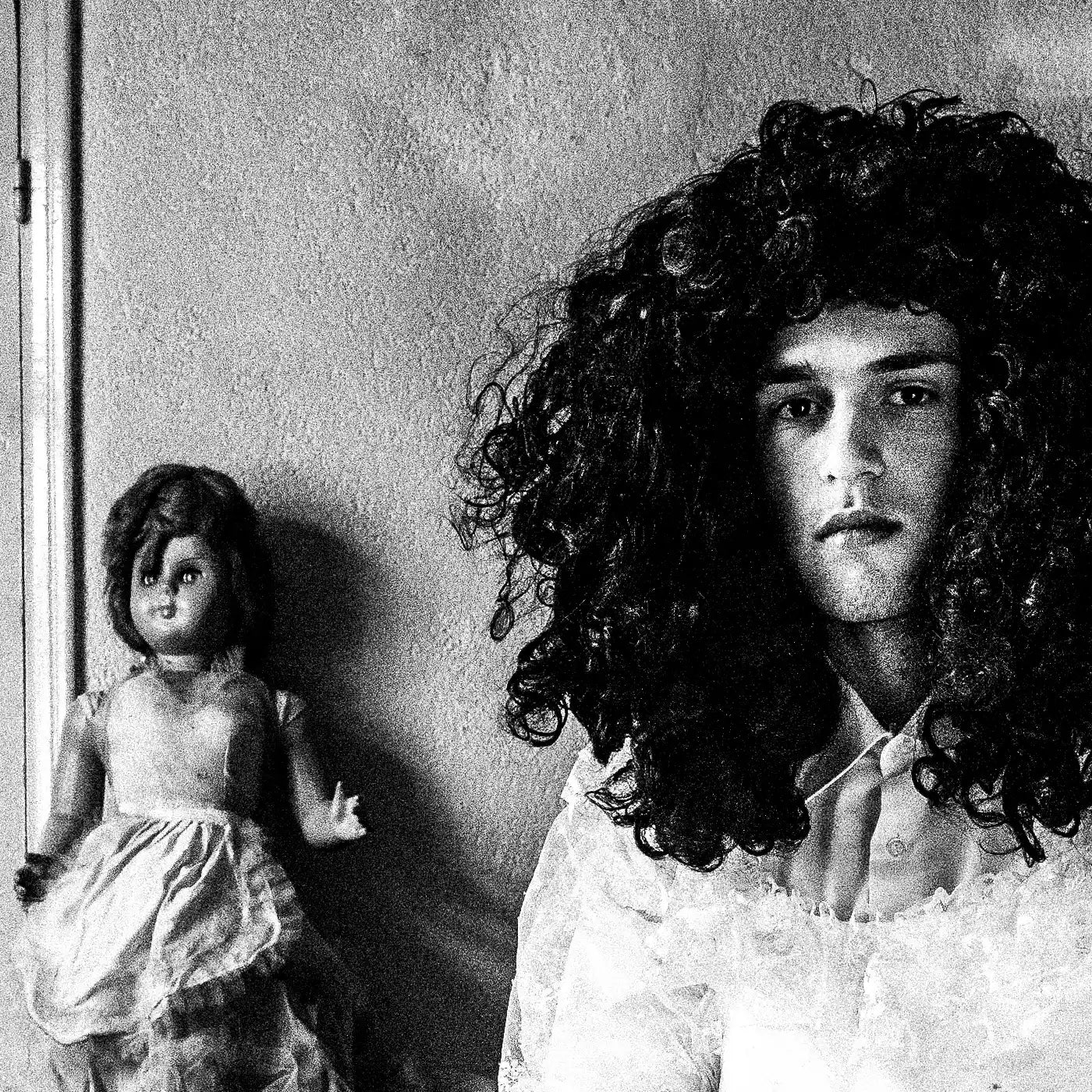

Photographed in Tetralofos, Kozani, this image presents a character from the Kotsamania ritual, a Dionysian-rooted winter custom preserved in Western Macedonia.
The subject is seated centrally within an interior space, facing the camera.
He is dressed as a bride, forming the primary visual and conceptual focus of the image.
Within the Kotsamania ritual, all roles are performed by men.
This structure is directly connected to ancient Greek theatrical tradition, where male performers embodied all characters.
The composition is organized around the seated figure, which acts as the anchor of the frame.
Behind him, a doll is positioned near the doorway, introducing a secondary human-like presence and extending the idea of representation and role.
The surrounding space includes domestic furniture and enclosed architectural elements, creating a controlled and contained environment.
Light enters from the left side, shaping the figure and separating him from the background.
The tonal contrast emphasizes the white dress against the darker interior.
The image operates on the relationship between identity and performance, where costume defines role within the ritual structure.
The Kotsamania custom includes a set of characters that are enacted collectively by members of the village.
Part of the Ethos series, a long-term body of work documenting Greek rituals and cultural practices.
Museum-quality black and white photography print by George Tatakis, produced on Hahnemühle Baryta Photo Rag 315gsm using archival pigment inks. Open edition, with signed and framed options. Each print is house-stamped on the reverse.